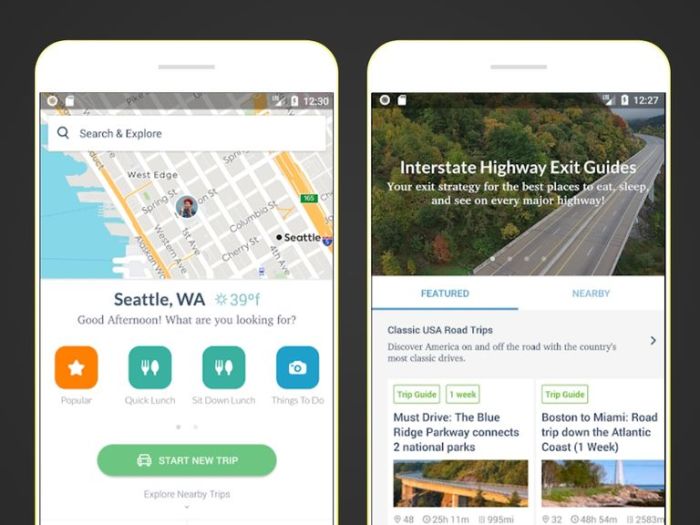
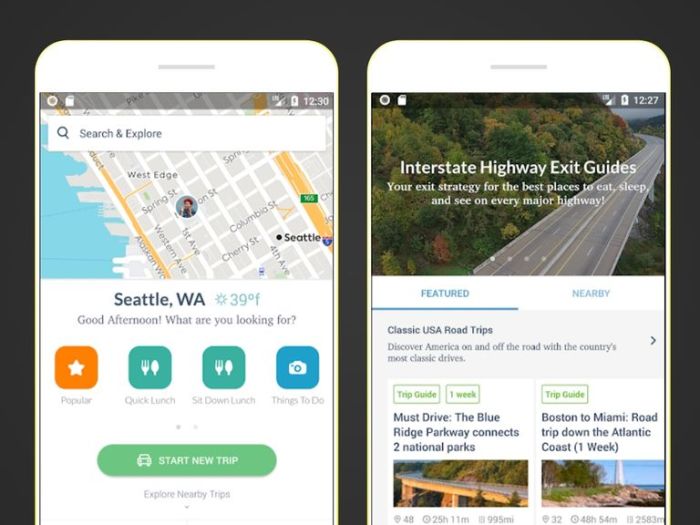
Road trip maps and apps have revolutionized how we plan and experience the open road. Gone are the days of relying solely on paper maps and guesswork; today, a plethora of digital tools offer seamless navigation, real-time traffic updates, and access to countless points of interest, transforming a simple journey into a meticulously planned adventure. This exploration delves into the world of these indispensable travel companions, comparing their features, benefits, and impact on the modern road trip experience.
From comparing the market share of popular apps like Google Maps and Waze to analyzing the innovative features of newer entrants, we’ll examine how these technologies have simplified route planning, enhanced safety, and even promoted sustainable travel practices. We’ll also consider the enduring value of traditional paper maps and discuss when they might still be preferred. The discussion will also touch upon related travel sectors, offering insights into flight deals, train travel, and various accommodation options to ensure a well-rounded travel planning experience.
Impact of Technology on Road Trip Planning
Technology has revolutionized road trip planning, transforming what was once a process of meticulous map-reading and guesswork into a streamlined, data-driven experience. Real-time information, sophisticated route optimization, and interactive features are now readily available, significantly enhancing the overall journey. This has led to more efficient trips, reduced stress, and the opportunity to discover hidden gems along the way.Real-time traffic updates significantly impact route planning and travel time predictions.
Previously, travelers relied on static maps and estimated travel times, often encountering unexpected delays due to accidents, construction, or heavy traffic.
Real-time Traffic Updates and Route Optimization
Real-time traffic data, fed into navigation apps by a multitude of sources including GPS-enabled vehicles and traffic cameras, dynamically adjusts suggested routes. For example, if an accident closes a major highway, the app will instantly reroute the user, potentially saving significant time and frustration. This dynamic recalculation is not merely about avoiding delays; it also optimizes fuel consumption by suggesting routes with less congestion and smoother traffic flow.
Apps like Google Maps and Waze exemplify this functionality, providing users with estimated times of arrival (ETAs) that constantly update based on current traffic conditions. The accuracy of these ETAs directly affects the planning process, allowing travelers to better schedule stops, activities, and accommodation.
Augmented Reality Enhancements for Road Trips
Augmented reality (AR) has the potential to significantly enhance the road trip experience beyond simple navigation. Imagine an AR overlay on your phone’s camera view, identifying points of interest in real-time as you drive. This could highlight historical landmarks, restaurants, or scenic viewpoints, providing contextual information without requiring you to constantly check a separate map or guide. Further, AR could offer interactive experiences, perhaps overlaying historical information on a building or showing a 3D model of a landmark as you approach it.
While still in its early stages of widespread adoption for road trips, the potential for AR to seamlessly integrate information into the driver’s visual field is considerable. For instance, an app could project a heads-up display onto the windshield, showing upcoming turns and distances without requiring the driver to look down at a screen. This would improve safety while providing vital navigation information.
Innovative Features in Road Trip Planning Apps
Newer road trip planning apps go beyond basic navigation, offering a range of innovative features designed to enhance the overall experience.The integration of offline maps is crucial for areas with limited or no cellular service. This ensures uninterrupted navigation even in remote locations. Many apps also offer personalized recommendations based on user preferences, suggesting points of interest, restaurants, or activities tailored to individual tastes.
For example, an app might suggest hiking trails for an outdoorsy user or museums for a history buff. Furthermore, some apps incorporate features like fuel price comparison tools, helping users find the cheapest gas stations along their route, and parking availability indicators, reducing the stress of finding parking in unfamiliar areas. Finally, the ability to share itineraries with fellow travelers and receive real-time location updates enhances collaboration and communication during the trip.
Comparison of Road Trip Apps vs. Traditional Maps
The choice between using a road trip app and traditional paper maps depends heavily on individual preferences and the specific needs of the journey. Both options offer unique advantages and disadvantages, impacting the ease of planning and the overall road trip experience. Understanding these differences is crucial for making an informed decision.Digital maps, offered through various apps like Google Maps, Waze, and Apple Maps, provide real-time navigation, traffic updates, and points of interest, while paper maps offer a tangible, offline alternative.
This comparison will delve into the strengths and weaknesses of each, highlighting scenarios where one clearly surpasses the other.
Ease of Use and Functionality
Digital maps generally boast superior ease of use. Their interactive interfaces allow for intuitive zooming, panning, and route adjustments. Real-time traffic data dynamically reroutes drivers around congestion, saving time and fuel. Many apps integrate with other services, offering features such as gas station location, restaurant recommendations, and accommodation bookings directly within the navigation interface. Paper maps, conversely, require manual manipulation and interpretation.
Finding specific locations and planning routes involves more effort and a higher chance of error. However, their simplicity can be advantageous for those unfamiliar with complex digital interfaces.
Advantages and Disadvantages of Digital Maps
Digital maps offer significant advantages. Their real-time data ensures efficient navigation, adapting to unexpected events like traffic accidents or road closures. The integration of points of interest simplifies the discovery and planning of stops along the route. Furthermore, many apps offer offline map downloads, mitigating the issue of connectivity loss in remote areas. However, reliance on technology presents disadvantages.
Battery depletion can render the app useless, and a lack of cellular or Wi-Fi connectivity can severely limit functionality in remote regions. Over-reliance on GPS navigation can also lead to a decreased sense of direction and spatial awareness.
Advantages and Disadvantages of Paper Maps
Paper maps provide a tangible and reliable backup navigation system. They function independently of technology, eliminating the concerns of battery life or connectivity issues. Their visual representation of the route can enhance spatial understanding and planning. However, paper maps lack the dynamic updates of digital maps, making them less efficient in responding to real-time traffic conditions. Their static nature also means that planning detours or finding alternative routes requires more effort and planning.
Additionally, paper maps can become cumbersome, especially for long road trips involving extensive route planning.
Scenarios Where Paper Maps Are Preferable
Several scenarios highlight the continued relevance of paper maps.
- Areas with poor or no cellular service: In remote areas with limited or no cell service, paper maps provide a reliable fallback navigation solution.
- Battery concerns: When battery life is a concern, or charging opportunities are limited, paper maps offer a fail-safe navigation option.
- Learning about the route and surrounding area: Studying a paper map allows for a more comprehensive understanding of the route and surrounding geography, promoting a deeper appreciation of the journey.
- Emergency situations: In emergency situations, a paper map provides a tangible backup, unaffected by technological failures.
- Novice drivers: Paper maps can be beneficial for novice drivers to develop their sense of direction and route planning skills.
Road Trip Apps and Sustainability
Road trip apps have evolved beyond simple navigation tools; they are increasingly incorporating features that promote environmentally conscious travel. By integrating data on alternative fuel sources, optimizing routes for fuel efficiency, and providing information on sustainable tourism destinations, these apps are playing a significant role in reducing the environmental impact of road trips. This section explores how these apps contribute to more sustainable travel practices.
The integration of sustainability features within road trip apps is a growing trend, driven by both consumer demand for eco-friendly travel and the increasing awareness of the environmental impact of transportation. These apps are not just about getting from point A to point B; they are becoming powerful tools for promoting responsible and sustainable tourism.
Electric Vehicle Charging Station Integration
Many modern road trip apps now include comprehensive databases of electric vehicle (EV) charging stations along planned routes. This is crucial for EV drivers, allowing them to plan journeys with confidence, knowing they can reliably recharge their vehicles. Apps often provide details such as charging speed, connector type, and real-time availability, minimizing range anxiety and promoting the wider adoption of electric vehicles for long-distance travel.
For example, a hypothetical app might show a route from Los Angeles to San Francisco, highlighting several fast-charging stations along the Pacific Coast Highway, with real-time charging status updates displayed. This eliminates the need for drivers to consult multiple, disparate sources of information, simplifying the planning process and encouraging EV usage.
Route Optimization for Fuel Efficiency
Efficient route planning is another key area where apps contribute to sustainability. By considering factors such as traffic congestion, road gradients, and speed limits, apps can suggest routes that minimize fuel consumption. Algorithms employed by these apps often analyze various route options and identify the most fuel-efficient path, potentially saving drivers significant amounts of fuel over the course of a long journey.
For instance, an app might suggest a slightly longer route that avoids steep hills and heavy traffic, resulting in better fuel economy compared to a shorter, faster route with frequent stops and idling. This feature is beneficial for both gasoline and diesel vehicles, reducing their overall carbon footprint.
Data-Driven Promotion of Sustainable Tourism
Data collected by road trip apps can be leveraged to promote sustainable tourism practices. By analyzing user data on popular destinations and travel patterns, app developers can identify areas experiencing high tourism pressure. This information can then be used to inform initiatives aimed at reducing the negative environmental impact of tourism in these areas, such as promoting off-season travel, encouraging visits to less-crowded locations, or highlighting eco-friendly accommodation options.
For example, if an app detects a surge in visits to a particular national park during peak season, it could proactively suggest alternative, less crowded parks or recommend visiting during the shoulder seasons to minimize environmental strain on the popular destination. This approach uses data to promote responsible travel and protect sensitive environments.
Related Travel Sectors: Road Trip Maps And Apps
Road trips often involve more than just driving; they frequently include flights, either to reach your starting point or to extend your adventure. Understanding how to find affordable flights and maximize rewards programs can significantly enhance your overall travel experience and budget. This section explores strategies for securing inexpensive airfare and leveraging frequent flyer programs to your advantage.Finding cheap flights requires a proactive approach and a willingness to be flexible.
While spontaneous trips can be exciting, planning ahead usually yields better results financially.
Strategies for Finding Inexpensive Flight Deals
Securing budget-friendly flights involves a multifaceted strategy. Several proven techniques can help travelers significantly reduce their airfare costs.
- Be Flexible with Dates: Mid-week flights (Tuesday and Wednesday) and off-season travel are generally cheaper. Consider flying during shoulder seasons (the periods between peak and off-peak seasons) for a balance of pleasant weather and lower prices. For example, traveling to a popular beach destination in May or September instead of July or August can result in considerable savings.
- Use Flight Comparison Websites: Websites like Google Flights, Skyscanner, Kayak, and Expedia aggregate flight data from various airlines, allowing for easy price comparison. These tools often reveal hidden deals and allow you to track price fluctuations.
- Book in Advance (or at the Last Minute): While generally, booking in advance offers better prices, sometimes last-minute deals appear. Consider using price tracking tools to monitor fluctuations and seize opportunities. Airlines sometimes release discounted seats closer to departure to fill empty planes.
- Consider Alternative Airports: Flying into smaller, less-popular airports near your destination can sometimes be significantly cheaper. Be prepared to factor in additional travel time from the airport to your final destination.
- Clear Your Browser History and Cookies: Airlines and travel websites sometimes use cookies to track your searches and may increase prices if they detect repeated searches for the same flight. Clearing your browser history can help avoid this.
Benefits of Using Flight Comparison Websites
Flight comparison websites offer several advantages for travelers seeking cost-effective airfare. Their ability to consolidate information from numerous sources simplifies the search process and often uncovers hidden deals.These websites provide a comprehensive overview of flight options, including various airlines, departure times, and layovers. This allows travelers to compare prices and choose the most suitable option based on their preferences and budget.
Furthermore, many sites offer price alerts and tracking features, notifying users of price changes, ensuring they don’t miss out on potential savings. The convenience and time-saving aspects are significant benefits, allowing travelers to focus on other aspects of their trip planning.
Maximizing Frequent Flyer Miles and Points
Frequent flyer programs offer valuable rewards, including free flights, upgrades, and other travel perks. Optimizing these programs requires strategic planning and consistent engagement.Careful selection of credit cards that offer bonus points or miles for travel expenses is crucial. Many airlines partner with credit card companies to offer co-branded cards that provide enhanced earning opportunities. Additionally, strategically choosing airlines within an alliance (like Star Alliance, SkyTeam, or Oneworld) allows you to accumulate miles across multiple airlines.
Finally, utilizing everyday spending to accumulate points, such as groceries, gas, or online purchases, significantly accelerates the accumulation process. Remember to check the expiration dates of your miles and points to avoid losing valuable rewards.
Related Travel Sectors: Road Trip Maps And Apps
While road trips offer unparalleled freedom, exploring destinations via train presents a distinct charm and logistical advantages. This section delves into the planning and benefits of scenic train journeys, comparing them to road travel and highlighting essential considerations for a smooth and enjoyable experience.
Planning a Scenic Train Journey
Planning a scenic train journey requires a different approach than a road trip. First, identify your desired route and destination. Consider the overall journey time and the specific scenic highlights along the way. Many rail companies offer routes specifically designed for tourism, boasting breathtaking views. Next, book your tickets well in advance, especially during peak seasons, to secure your preferred seats and potentially snag discounts.
Research the amenities offered on your chosen train, such as dining cars, observation cars, or Wi-Fi access, to better tailor your expectations. Finally, research the towns and cities along your route, identifying potential stops for sightseeing or overnight stays. This allows for a more immersive and fulfilling travel experience.
Advantages and Disadvantages of Train Travel
Train travel offers several compelling advantages over other modes of transport. For instance, the ability to relax and enjoy the scenery while someone else handles the driving is a significant draw. Trains often offer more comfortable seating and legroom than cars or buses, particularly on longer journeys. Additionally, train travel is often more environmentally friendly than air travel or driving a personal vehicle, reducing your carbon footprint.
However, train travel also presents some disadvantages. Train routes are often less flexible than driving, limiting spontaneous detours or changes in itinerary. Train schedules can be less frequent than bus or road travel, potentially lengthening journey times. Finally, train tickets can sometimes be more expensive than other transportation options, particularly for long-distance journeys.
Essential Items to Pack for a Train Trip
Packing strategically for a train trip ensures comfort and convenience throughout your journey. A comfortable neck pillow is crucial for long journeys, promoting relaxation and reducing neck strain. A good book or e-reader offers entertainment during downtime. A portable charger is essential for keeping electronic devices powered up, especially if the train doesn’t offer readily accessible power outlets.
Consider bringing snacks and drinks to avoid relying solely on train dining options, which may be limited or expensive. Lastly, comfortable clothing and footwear are paramount for a pleasant journey. Comfortable layers are advisable, as train temperatures can fluctuate.
Related Travel Sectors: Road Trip Maps And Apps
Road trips and cruises, while seemingly disparate, share a common thread: the pursuit of adventure and exploration. Understanding the cruise industry can provide valuable insights for travel planners and broaden the scope of travel offerings. This section examines the cruise ship market, focusing on the comparison of amenities and experiences, and the factors influencing cruise selection.
Cruise Ship Amenities and Experiences
Different cruise lines cater to diverse preferences, offering a wide range of amenities and experiences. Luxury lines, such as Regent Seven Seas Cruises and Silversea Cruises, emphasize all-inclusive luxury, with lavish suites, gourmet dining, and personalized service. Mass-market lines, like Carnival and Royal Caribbean, prioritize affordability and offer a wider array of onboard activities, from water parks and Broadway-style shows to rock climbing walls and ice skating rinks.
Expedition cruises, often offered by companies like Quark Expeditions and Lindblad Expeditions, focus on unique destinations and immersive experiences in remote locations, prioritizing nature and wildlife encounters. The choice depends heavily on individual preferences and budget.
Factors to Consider When Choosing a Cruise Ship
Selecting a cruise involves considering several key factors. Budget is paramount; prices vary significantly based on the cruise line, ship size, cabin type, and time of year. Destination is another crucial factor; cruises range from Caribbean getaways to transatlantic voyages and world cruises, each offering unique experiences. Amenities and onboard activities are also vital; consider whether you prefer a relaxing experience with fine dining and spa treatments, or an action-packed vacation with numerous onboard activities.
Finally, customer reviews and ratings provide valuable insights into the overall experience, helping to gauge the quality of service, cleanliness, and overall satisfaction levels of previous passengers.
Cruise Line Comparison
| Cruise Line | Price Range (per person) | Amenities | Typical Destinations | Customer Rating (average) |
|---|---|---|---|---|
| Carnival Cruise Line | $500 – $1500 | Water parks, Broadway-style shows, multiple dining options, casual atmosphere | Caribbean, Bahamas, Mexico | 3.8/5 |
| Royal Caribbean International | $700 – $2000 | Ice skating rink, rock climbing wall, zip line, diverse dining options, family-friendly activities | Caribbean, Europe, Alaska | 4.0/5 |
| Disney Cruise Line | $1000 – $3000 | Character meet-and-greets, Disney-themed shows, kids’ clubs, family-friendly activities | Bahamas, Caribbean, Alaska | 4.5/5 |
| Regent Seven Seas Cruises | $3000 – $10000+ | All-inclusive luxury, gourmet dining, personalized service, spacious suites, shore excursions included | Mediterranean, Caribbean, Alaska, world cruises | 4.7/5 |
Note: Price ranges are approximate and can vary significantly based on the length of the cruise, cabin type, and time of year. Customer ratings are based on average scores from various online review platforms and may fluctuate.
Related Travel Sectors: Road Trip Maps And Apps
Road trip guides represent a significant sector within the broader travel industry, offering valuable resources and support to individuals and groups planning their adventures. These guides provide crucial information, ranging from detailed route planning to insightful recommendations on accommodation and attractions, significantly enhancing the overall road trip experience. They cater to a diverse audience, from seasoned travelers seeking unique experiences to first-timers needing comprehensive guidance.
Planning a Successful Road Trip: A Step-by-Step Guide
Effective road trip planning is essential for a smooth and enjoyable journey. A well-structured approach minimizes unforeseen issues and maximizes the enjoyment of the trip. The following steps provide a framework for planning a successful road trip.
- Define your destination and timeframe: Determine your starting point, desired destination(s), and the length of your trip. This establishes the foundation for all subsequent planning stages.
- Research your route: Utilize maps and apps to plot your route, considering factors such as distance, road conditions, and potential detours. Research points of interest along the way.
- Create a budget: Estimate expenses for fuel, accommodation, food, activities, and potential emergencies. Tracking spending during the trip helps to stay within budget.
- Book accommodations and activities in advance: Especially during peak seasons, reserving accommodations and popular attractions beforehand ensures availability and can often secure better rates.
- Pack appropriately: Prepare a packing list based on your destination, climate, and planned activities. Include essentials such as clothing, toiletries, medications, and emergency supplies.
- Inform someone of your itinerary: Share your planned route and expected return time with a trusted friend or family member. This is a crucial safety precaution.
- Check your vehicle: Ensure your vehicle is in good working order before embarking on your journey. This includes checking tire pressure, fluid levels, and overall mechanical condition.
Creating a Memorable Road Trip Itinerary
A well-crafted itinerary is key to a memorable road trip, balancing structured plans with opportunities for spontaneity. It should incorporate both must-see attractions and opportunities for unplanned discoveries.
Consider incorporating a mix of popular destinations and lesser-known gems. Research local events and festivals that might coincide with your trip. Allow for flexibility in your schedule to accommodate unexpected delays or spontaneous detours. For example, if you’re traveling the Pacific Coast Highway, you might plan to visit specific beaches, but also leave room to stop at unexpected coves or scenic overlooks.
Incorporating themed days can also add to the experience. Perhaps one day is dedicated to exploring national parks, another to experiencing local cuisine, and another to visiting historical sites. Remember to balance structured activities with ample downtime for relaxation and enjoying the journey itself.
Handling Unexpected Events During a Road Trip
Even the most meticulously planned road trips can encounter unexpected events. Being prepared for these contingencies minimizes disruption and ensures a safer journey.
Having a comprehensive emergency kit is essential. This kit should include a first-aid kit, jumper cables, a flashlight, basic tools, and a supply of water and non-perishable food. Knowing how to change a tire and perform basic vehicle maintenance is also beneficial. Consider purchasing roadside assistance for added peace of mind. For example, AAA offers comprehensive roadside assistance, including towing, jump starts, and tire changes.
Staying informed about weather conditions and road closures is crucial, particularly in remote areas. Having alternative routes planned can mitigate the impact of unexpected road closures. Regularly checking your vehicle’s condition and addressing any minor issues promptly can prevent more significant problems down the road.
Related Travel Sectors: Road Trip Maps And Apps
Finding affordable accommodation is crucial for budget-conscious road trippers. Smart choices in lodging can significantly impact the overall cost of your adventure, freeing up funds for other exciting experiences along the way. This section explores various budget-friendly accommodation options and strategies to help you maximize your savings.
Budget Accommodation Tips
Choosing the right accommodation is paramount to a successful and affordable road trip. Several strategies can help you secure comfortable lodging without breaking the bank. Consider these five tips to navigate the options and find the best fit for your travel style and budget.
- Book in Advance: Securing accommodation well in advance, especially during peak seasons, often yields better rates and a wider selection of options. Last-minute bookings frequently result in higher prices due to increased demand.
- Utilize Booking Websites and Apps: Platforms like Booking.com, Expedia, and Kayak allow for comparison shopping, filtering by price, and reading reviews from other travelers. These tools can significantly streamline the search for budget-friendly accommodations.
- Consider Off-Season Travel: Traveling during the shoulder seasons (spring and autumn) or off-peak times often translates to significantly lower accommodation prices compared to peak summer months.
- Be Flexible with Location: Slightly altering your destination or opting for accommodation just outside major city centers can dramatically reduce costs. A short drive to your planned activities might be worth the savings.
- Look for Deals and Packages: Many hotels and vacation rental sites offer discounts for longer stays, advance bookings, or bundled packages that include extras like breakfast or airport transfers.
Hostels, Budget Hotels, and Vacation Rentals: A Comparison
Each accommodation type presents unique advantages and disadvantages, influencing the overall road trip experience.
| Accommodation Type | Pros | Cons |
|---|---|---|
| Hostels | Affordable, social atmosphere, opportunity to meet fellow travelers | Shared rooms and facilities, potential noise, less privacy |
| Budget Hotels | Private rooms, basic amenities, often conveniently located | Can be less characterful than other options, potentially smaller rooms |
| Vacation Rentals | More space, kitchen facilities, often homey atmosphere | Can be more expensive than hostels or budget hotels, potentially require more cleaning |
Strategies for Saving Money on Accommodation
Several additional strategies can help minimize accommodation expenses during your road trip.
- Embrace Camping or Glamping: Camping offers a remarkably affordable way to experience the outdoors, while glamping provides a more comfortable, upscale camping experience.
- Utilize Rewards Programs: Many hotel chains and booking platforms offer loyalty programs that can accumulate points for discounts or free nights.
- Consider House Sitting or Pet Sitting: Websites connect travelers with homeowners needing temporary care for their pets or homes, providing free accommodation in exchange for services.
- Couchsurfing: This platform connects travelers with locals willing to host them for free, providing a unique cultural exchange experience.
Related Travel Sectors: Road Trip Maps And Apps
Road trips often involve more than just the journey itself; accommodation plays a crucial role in shaping the overall travel experience. The rise of vacation rentals, particularly through platforms like Airbnb, has significantly impacted the travel industry, offering travelers alternatives to traditional hotel stays. This section explores the benefits and considerations associated with choosing vacation rentals over hotels, and provides guidance on selecting the right property for your road trip.Vacation rentals, such as those found on Airbnb or VRBO, offer a unique blend of convenience and affordability, often providing a more home-like experience compared to hotels.
This comparison highlights the key differences and helps travelers make informed decisions based on their individual needs and preferences.
Vacation Rentals versus Hotels: A Comparison of Benefits
Vacation rentals frequently provide more space than hotel rooms, often including kitchens, living areas, and multiple bedrooms, making them ideal for families or groups traveling together. This added space allows for greater comfort and privacy, fostering a more relaxed atmosphere during the trip. Hotels, conversely, typically offer smaller, more standardized rooms, prioritizing efficiency and uniformity. The cost-effectiveness of vacation rentals, especially for larger groups, can be significantly higher than the combined cost of multiple hotel rooms.
Moreover, vacation rentals often offer amenities such as laundry facilities and outdoor spaces, which can be particularly valuable during extended road trips. Hotels typically provide amenities like pools and fitness centers, but these might come at an additional cost. The personalized experience offered by vacation rentals, reflecting the unique character of each property and its location, contrasts with the standardized experience of most hotels.
Factors to Consider When Booking a Vacation Rental
Several key factors should be carefully evaluated before booking a vacation rental. Location is paramount; proximity to attractions, transportation, and essential services should be prioritized. The size and layout of the property should align with the needs of the traveling party. Reviews from previous guests provide invaluable insights into the property’s cleanliness, amenities, and overall experience. The rental agreement should be thoroughly reviewed, paying close attention to cancellation policies, payment terms, and house rules.
Confirming the availability of essential amenities, such as Wi-Fi, parking, and kitchen appliances, ensures a smooth and comfortable stay. Finally, communication with the host is vital; responsiveness and clarity in addressing inquiries should be considered.
Checklist for Reviewing Vacation Rental Listings
Before committing to a booking, a thorough review of the listing is essential. A comprehensive checklist can help ensure all important aspects are considered.
- Location: Check the proximity to desired attractions, transportation, and local amenities.
- Property Size and Layout: Verify that the space is suitable for the number of guests and their needs.
- Guest Reviews: Carefully read multiple reviews to gain a holistic understanding of the property’s condition and the host’s responsiveness.
- Amenities: Confirm the availability of essential amenities such as Wi-Fi, kitchen appliances, and parking.
- Photos and Videos: Scrutinize photos and videos to assess the accuracy of the listing’s description and the property’s overall condition.
- Rental Agreement: Thoroughly review the rental agreement, paying attention to cancellation policies, payment terms, and house rules.
- Host Communication: Assess the host’s responsiveness and clarity in addressing inquiries.
- Price and Value: Compare the price with similar properties in the area to ensure fair value.
Related Travel Sectors: Road Trip Maps And Apps
Planning a road trip involves more than just charting a course; accommodation plays a crucial role in the overall experience. Choosing the right hotel can significantly impact comfort, convenience, and the enjoyment of your journey. Understanding how to navigate hotel reviews and make informed decisions is therefore a vital aspect of successful road trip planning.Choosing a hotel requires careful consideration of various factors beyond just price.
This section will explore how to identify reliable online hotel reviews and offer practical tips for selecting accommodation that aligns with your travel needs. We will also cover the process of addressing any issues that may arise during your stay.
Identifying Trustworthy Hotel Reviews Online
The sheer volume of online hotel reviews can be overwhelming. Discerning genuine feedback from fake or biased reviews requires a critical approach. Look for reviews that are detailed and specific, avoiding those that are overly positive or negative without sufficient justification. Pay attention to the reviewer’s history; frequent reviewers with a mix of positive and negative reviews across different establishments are generally more reliable than those with only glowing or scathing comments.
Websites like TripAdvisor and Booking.com often have mechanisms to flag suspicious reviews, and checking multiple platforms can provide a more balanced perspective. Consider the dates of the reviews; recent reviews are generally more relevant than older ones, especially for hotels undergoing renovations or changes in management.
Tips for Choosing a Hotel That Meets Your Needs
Prioritize your needs when selecting a hotel. Consider factors such as location, proximity to attractions or transportation hubs, amenities (e.g., parking, Wi-Fi, pool), and budget. Read reviews focusing on aspects relevant to your priorities. For example, if you’re traveling with children, look for reviews mentioning family-friendliness and the availability of suitable facilities. If you need easy access to public transportation, check the hotel’s location and reviews regarding its proximity to bus stops or train stations.
Using hotel booking websites’ filter options can significantly narrow your search based on specific criteria. Compare prices across different platforms to ensure you’re getting the best deal.
Handling Complaints or Issues with Hotel Services
Despite careful planning, issues can arise. Addressing complaints effectively is essential for resolving problems and ensuring a satisfactory experience. If you encounter a problem, report it to the hotel staff immediately. Be polite but firm in explaining the issue. Document the issue with photos or videos if possible.
If the problem isn’t resolved to your satisfaction, escalate the complaint to a higher authority within the hotel management. If necessary, contact the booking platform or credit card company to dispute charges. Keep records of all communication and actions taken. Many hotels have a formal complaints procedure; familiarize yourself with it before your stay.
Related Travel Sectors: Road Trip Maps And Apps
RV and camper travel represents a significant segment within the broader road trip market, offering a unique blend of freedom, flexibility, and immersive travel experiences. This mode of travel allows for extended stays in locations, exploration of off-the-beaten-path destinations, and a higher degree of self-sufficiency compared to traditional hotel-based trips. Understanding the advantages and disadvantages, as well as effective planning strategies, is crucial for a successful RV or camper road trip.
Advantages and Disadvantages of RV and Camper Travel
RV and camper travel offers several compelling advantages. The primary benefit is the unparalleled freedom and flexibility it provides. Travelers can choose their own routes, linger in scenic locations as long as they wish, and avoid the constraints of pre-booked accommodations. Additionally, the cost-effectiveness can be significant, particularly for larger groups or families, as accommodation and some meal preparation costs are integrated.
The immersive nature of the experience, living and traveling within the vehicle, leads to a deeper connection with the journey and the destinations visited. However, RV and camper travel also presents certain challenges. The size and maneuverability of RVs can be restrictive, particularly in congested urban areas or on narrow roads. Maintenance and upkeep of the vehicle are additional considerations, requiring both time and financial resources.
Furthermore, reliance on campsites and designated RV parks can limit spontaneity and access to certain areas.
Essential Items for RV and Camper Travel
A well-planned packing list is essential for a smooth and enjoyable RV or camper road trip. Overlooking even minor items can quickly disrupt the journey. Therefore, meticulous preparation is key.
- Navigation and Communication: GPS device, maps, cell phone, satellite phone (for remote areas), and chargers.
- Vehicle Maintenance: Basic toolkit, spare tire, jack, jumper cables, tire pressure gauge, and owner’s manual.
- Cooking and Food: Portable stove, cookware, utensils, cooler, non-perishable food items, and water.
- Sleeping and Comfort: Bedding, pillows, towels, and personal hygiene items.
- Clothing and Footwear: Appropriate attire for various weather conditions, comfortable walking shoes, and rain gear.
- Safety and First Aid: Comprehensive first-aid kit, flashlight, and any necessary prescription medications.
- Entertainment: Books, games, movies, and music.
Planning an RV or Camper Road Trip
Successful RV and camper road trips require careful planning and consideration of various factors. Thorough route planning, considering the size and capabilities of the vehicle, is paramount. Booking campsites in advance, particularly during peak season, is highly recommended. Understanding the weight limits and fuel efficiency of the RV is also crucial for effective route planning and budgeting.
- Route Planning: Map out your route, considering distances, driving times, and potential stops. Factor in the size and maneuverability of your RV when choosing roads.
- Campsite Reservations: Book campsites in advance, especially during peak season or popular travel times. Consider the amenities offered at each campsite to meet your needs.
- Budgeting: Account for fuel costs, campsite fees, food, maintenance, and other potential expenses. Create a realistic budget and stick to it.
- Vehicle Maintenance: Ensure your RV is in good working order before embarking on your trip. Perform necessary maintenance checks and address any potential issues.
- Emergency Preparedness: Pack a comprehensive emergency kit, including a first-aid kit, flashlight, and extra food and water. Familiarize yourself with emergency procedures for your RV.
Related Travel Sectors: Road Trip Maps And Apps
Road trips are more than just the journey; they’re about the experiences, and a significant part of that experience is where you lay your head at night. Unique accommodations add a layer of adventure and memorability to any road trip, transforming a simple overnight stop into a highlight of the trip itself. The rise of unique stays caters to a growing desire for authentic and immersive travel experiences, moving beyond the standard hotel room.The appeal of unique accommodations like treehouses and yurts stems from their ability to offer a connection with nature and a sense of escape from the ordinary.
They provide a different perspective, a chance to disconnect from technology and reconnect with oneself and the environment. These spaces often prioritize comfort and unique design, creating memorable and Instagrammable moments that enhance the overall travel narrative. The novelty factor alone makes them a popular choice for travelers seeking something beyond the predictable.
Unique Stay Options: Examples from Around the World
Treehouses offer a childhood fantasy brought to life, providing a secluded and elevated perspective. Imagine waking up to birdsong in a handcrafted treehouse nestled amongst redwood giants in California, or enjoying panoramic views from a luxurious treetop suite overlooking the Amazon rainforest. Yurts, traditional nomadic dwellings, provide a taste of cultural immersion. A stay in a Mongolian yurt offers a glimpse into a nomadic lifestyle, complete with traditional furnishings and breathtaking landscapes.
Other unique options include converted barns in the English countryside, offering rustic charm and a connection to agricultural history; cave hotels carved into ancient rock formations in Cappadocia, Turkey, offering a unique geological experience; and even repurposed shipping containers transformed into stylish and sustainable accommodations found in various urban and coastal locations worldwide. The possibilities are vast and varied, catering to a wide range of tastes and budgets.
Finding and Booking Unique Accommodations, Road trip maps and apps
Several platforms specialize in connecting travelers with unique accommodations. Websites and apps like Airbnb, VRBO, and Glamping Hub offer a wide selection of unusual stays, allowing travelers to filter their search by location, type of accommodation, and amenities. Directly contacting local tourism boards or searching for independent boutique hotels and guesthouses can also unearth hidden gems. When booking, it’s essential to carefully read reviews, pay attention to location details (access to amenities, transportation), and understand the level of comfort and amenities provided.
Booking in advance, especially during peak season, is highly recommended to secure your preferred dates and avoid disappointment. Reading detailed descriptions and viewing high-quality photos is crucial to ensure the accommodation aligns with your expectations and preferences.
Related Travel Sectors: Road Trip Maps And Apps
Road trips offer a unique blend of freedom and adventure, but extending the experience beyond the car can significantly enhance the overall journey. Houseboats and yachts represent a compelling alternative or addition to traditional road trip itineraries, providing a different perspective and a chance to explore waterways alongside the open road. This section will explore the distinct experiences offered by each and provide guidance on planning such a vacation.Houseboats and yachts cater to different preferences and offer distinct travel experiences.
While both involve water-based accommodation, their style, amenities, and the overall experience differ considerably.
Houseboat versus Yacht Stays: A Comparison
Houseboats typically offer a more relaxed and informal atmosphere. They are often larger, providing more space for families or groups, and are generally easier to maneuver, especially for those with limited boating experience. Think spacious living areas, fully equipped kitchens, and often multiple bedrooms. The experience leans towards a comfortable, homely feel, perfect for leisurely cruising and enjoying the scenery at a slower pace.
In contrast, yachts are often associated with a more luxurious and sophisticated experience. They tend to be more streamlined, prioritizing speed and maneuverability over sheer living space. Yachts often feature high-end amenities, stylish interiors, and may include crew to handle navigation and maintenance, freeing up the renters to fully enjoy the experience. The atmosphere is generally more refined and focused on speed and exploration.
Factors to Consider When Choosing a Houseboat or Yacht Rental
Choosing between a houseboat and a yacht depends heavily on individual preferences and priorities. Several factors should be carefully considered:
- Budget: Yacht rentals are significantly more expensive than houseboat rentals, reflecting the higher level of luxury and maintenance involved.
- Experience Level: Houseboats are generally easier to operate, making them suitable for beginners. Yachts often require more experience or the hiring of a captain.
- Group Size and Composition: Houseboats are ideal for larger groups and families due to their spacious layouts. Yachts may be more suitable for smaller groups seeking a more luxurious and intimate experience.
- Desired Activities: Houseboats lend themselves to leisurely cruising, fishing, and swimming. Yachts are better suited for those who want to cover more distance quickly and perhaps engage in watersports.
- Destination: The availability of houseboats and yachts varies greatly depending on the location. Some waterways are better suited for houseboats due to their size and shallower depths.
Planning a Houseboat or Yacht Vacation
Planning a houseboat or yacht vacation requires careful consideration of several key aspects:
- Destination Selection: Research different waterways and locations to find the best fit for your desired activities and experience level.
- Rental Company Selection: Choose a reputable rental company with a good track record and excellent customer reviews. Check for insurance coverage and cancellation policies.
- Booking in Advance: Popular destinations and times of year fill up quickly, so book well in advance to secure your preferred dates and vessel.
- Itinerary Planning: Plan your route and activities, considering potential weather conditions and navigational challenges. Factor in time for relaxation and unscheduled adventures.
- Provisioning: If self-catering, make a detailed list of food and supplies needed for the duration of your trip. Consider the vessel’s storage capacity.
- Safety Precautions: Familiarize yourself with safety procedures, including emergency protocols and communication systems. Check the weather forecast regularly.
Ultimately, the choice between traditional maps and digital road trip apps depends on individual preferences and the specific needs of each journey. While paper maps offer a tangible, fail-safe option, the convenience, real-time updates, and comprehensive features of digital apps are undeniable. By understanding the strengths and weaknesses of each, travelers can equip themselves with the best tools to plan and enjoy memorable and efficient road trips.
The future of road trip planning undoubtedly lies in the continued evolution of these digital tools, promising even more seamless and enriching travel experiences.
Top FAQs
What is the best road trip app for offline use?
Several apps allow for offline map downloads, including Google Maps and Here WeGo. The best choice depends on the specific region and features needed.
How can I avoid data overages while using navigation apps?
Download offline maps before your trip and utilize features that minimize data usage. Consider using a data-saving mode on your phone or purchasing a temporary data plan.
Are there apps that integrate with electric vehicle charging stations?
Yes, many navigation apps now integrate with charging station databases, allowing you to plan routes that incorporate charging stops.
What’s the best way to handle unexpected events (e.g., flat tire) during a road trip?
Always have a well-stocked emergency kit, and use your app’s emergency services feature or contact roadside assistance.


